
Yacht Dealer
A showcase website with a boutique aesthetic but unlimited potential.
- Development, UX/UI Design
- Development, Figma, Search Engine
2025
Reflect a premium identity and integrate real-time inventory data via API from boats.com to show up-to-date boats, detailed technical specifications, and advanced search capabilities.
Introduction
anchoryg.com is a showcase website for a high-end yacht broker/dealer, designed to combine an elegant and refined boutique aesthetic with a powerful and dynamic backend.

Project creation steps
[ The project was carried out during my time at BuildIt DM.
Due to company policy, I cannot go into detail about the different stages of the study. ]
Analysis
Definition of target audience and competitors.
Definition
Definition of objectives. Creation of user personas.
Concept
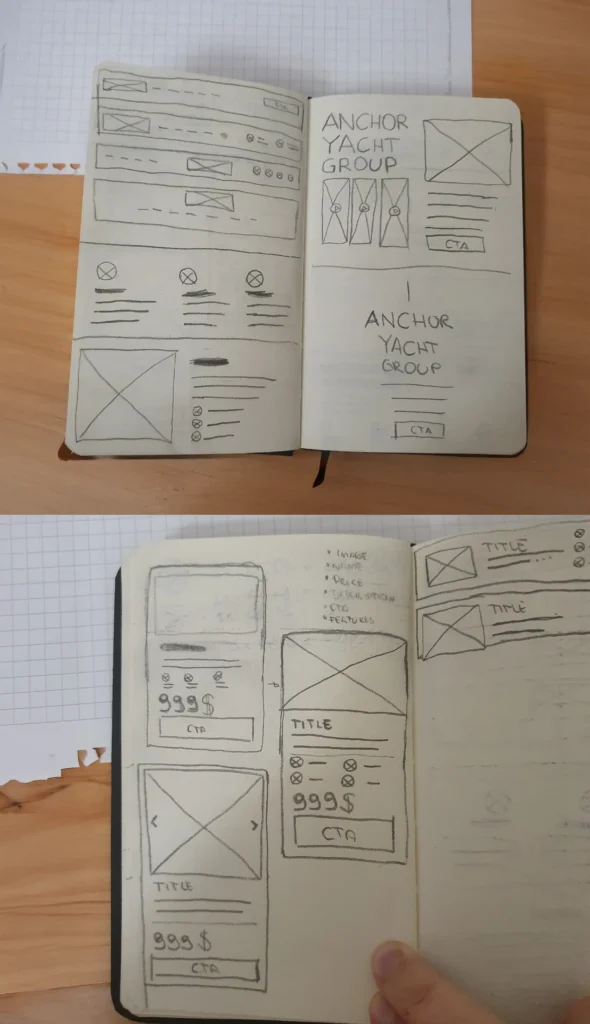
Brainstorming and prototyping on paper.
Design
Mockup design on Figma.
Test & Launch
Website development in WordPress.
After final approval, testing, and launch of the website.
Analysis
In the initial phase, I conducted a targeted study of user personas, identifying three main groups: premium buyers looking for high-end boats, professional brokers, and boating enthusiasts interested in consulting catalogs and technical data sheets.
At the same time, I analyzed competitors in the yacht brokerage sector to understand trends, industry standards, and opportunities for differentiation. This analysis allowed me to define UX objectives and key features, including the need to integrate up-to-date data via the Boats.com API.
Def
In collaboration with the external marketing department, I defined the brand positioning, visual tone, and key messages to be conveyed on the website. This work resulted in a clear direction: a boutique aesthetic accompanied by a modern and dynamic digital experience.
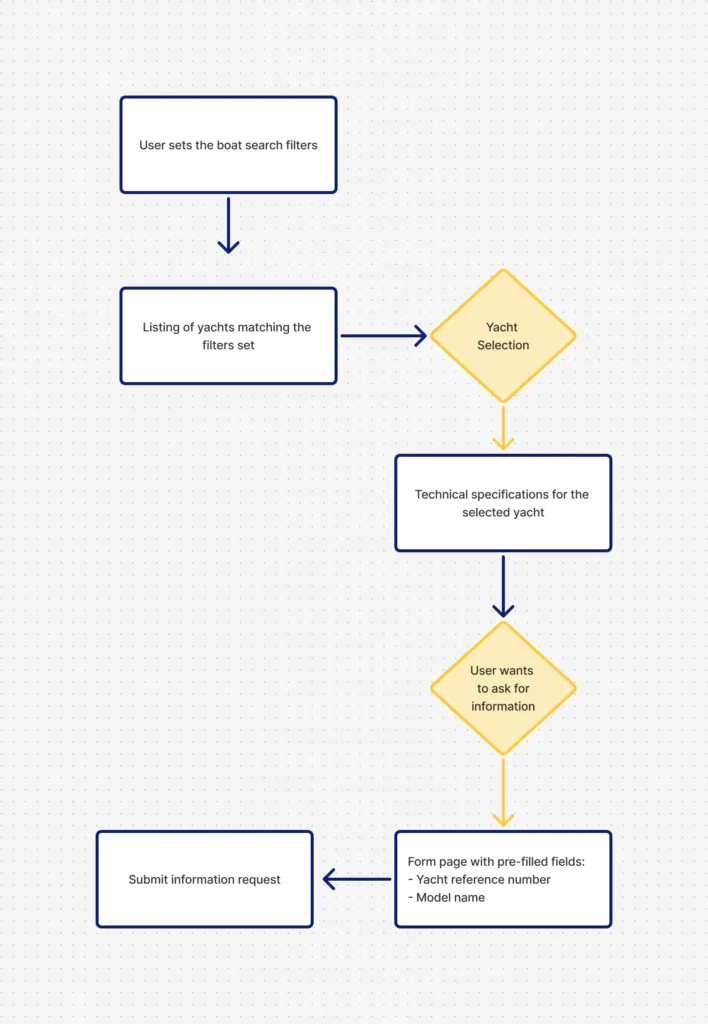
I also defined the information architecture and structure of the main sections, including the dynamic boat listing, while planning the technical logic of the API-linked personalized search.
Concept
During the design phase, I developed the fundamental UX flows, with particular attention to boat searches and technical detail consultation. I developed several visual and functional concepts, selecting those most in line with the brand and user habits.
The goal was to offer clean, intuitive, and consistent navigation, keeping the presentation of the boats and ease of contact at the center.
Design & Prototyping
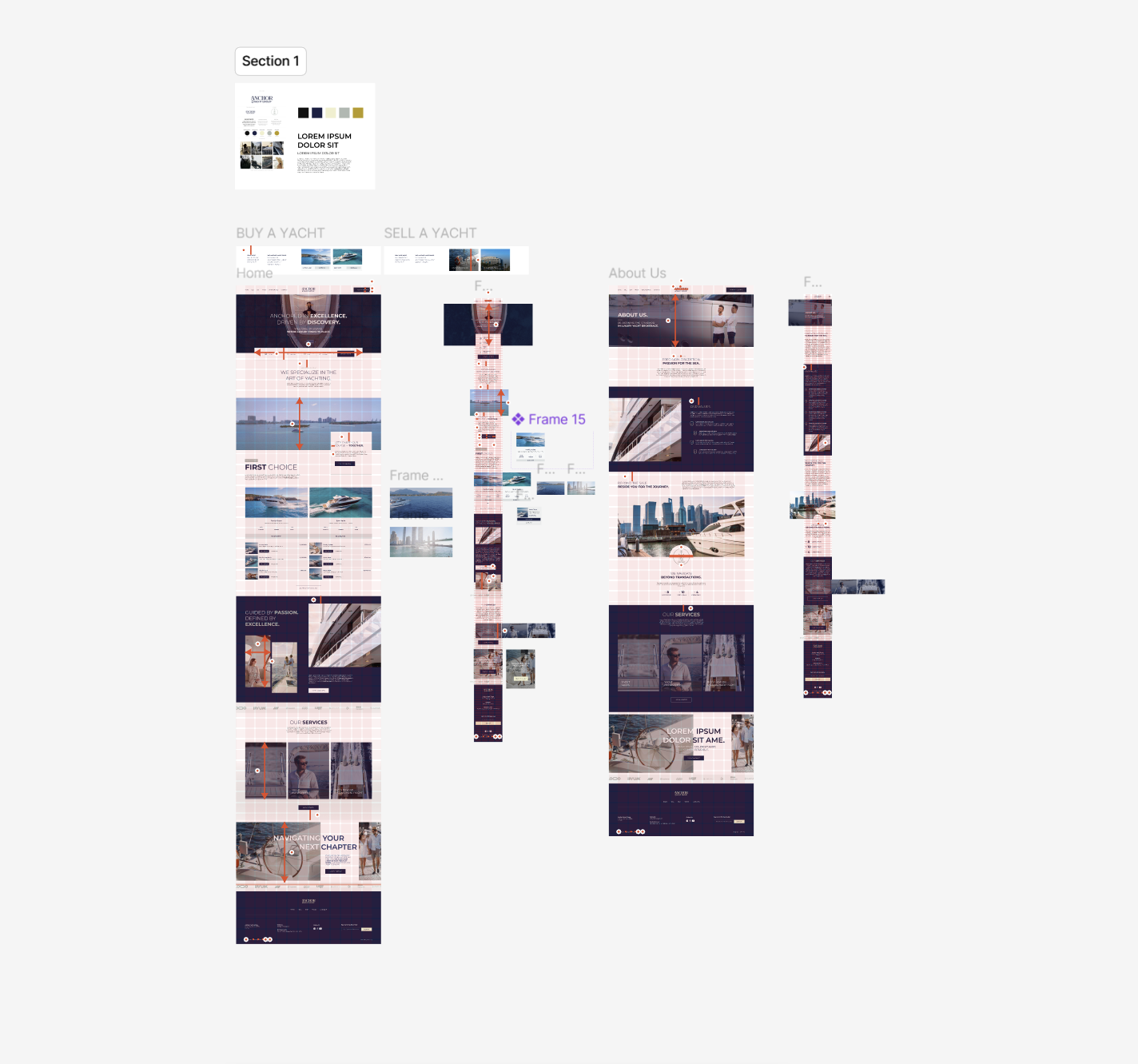
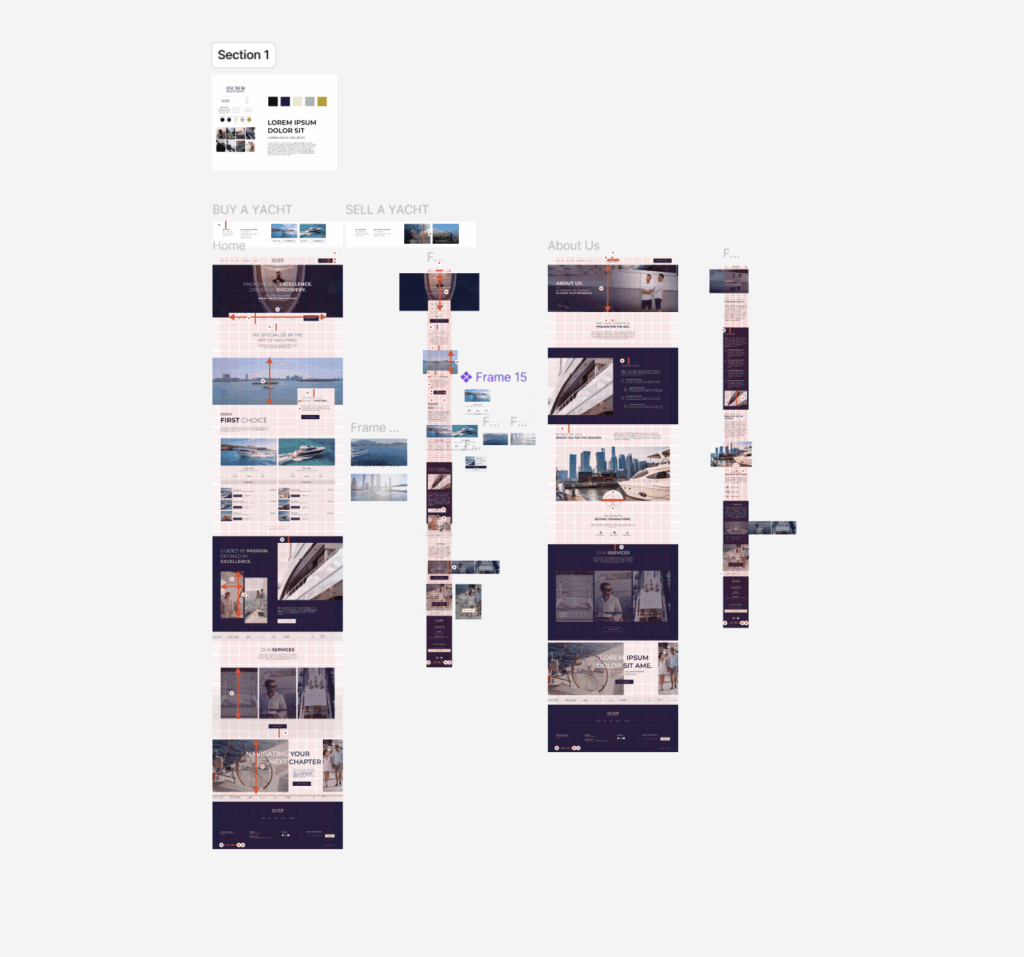
I created high-fidelity wireframes and mockups in Figma to visualize the entire user experience and ensure stylistic consistency.
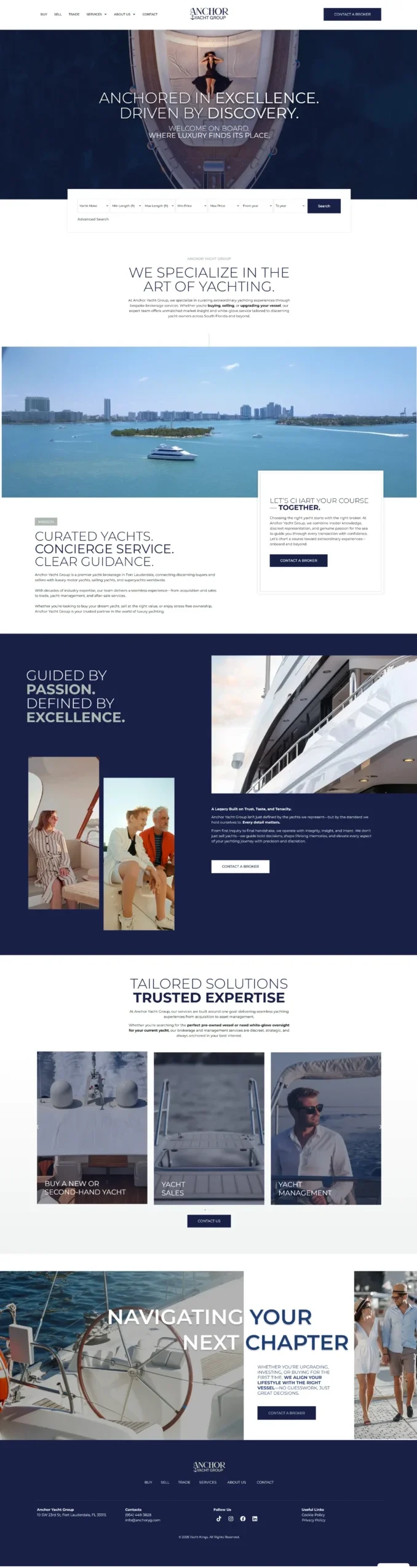
The UI design was developed using an elegant marine palette, modern typography, and a spacious, minimalist layout designed to enhance the images of the boats.
Through an interactive prototype, I allowed the client and the marketing department to visualize and test the entire flow before the development phase.
Development
The site was built on the WordPress platform, with a flexible structure and fully integrated with Elementor PRO.
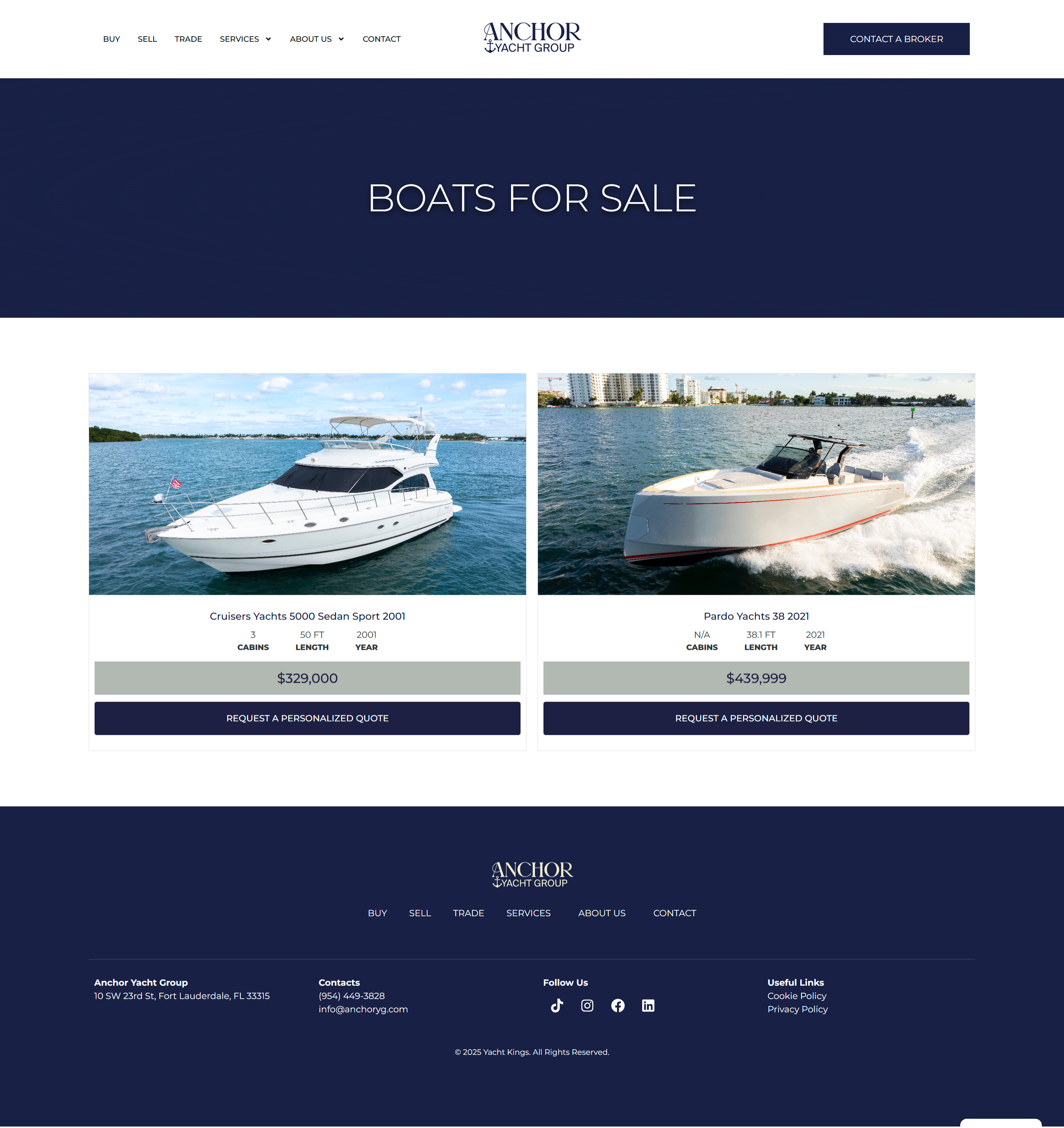
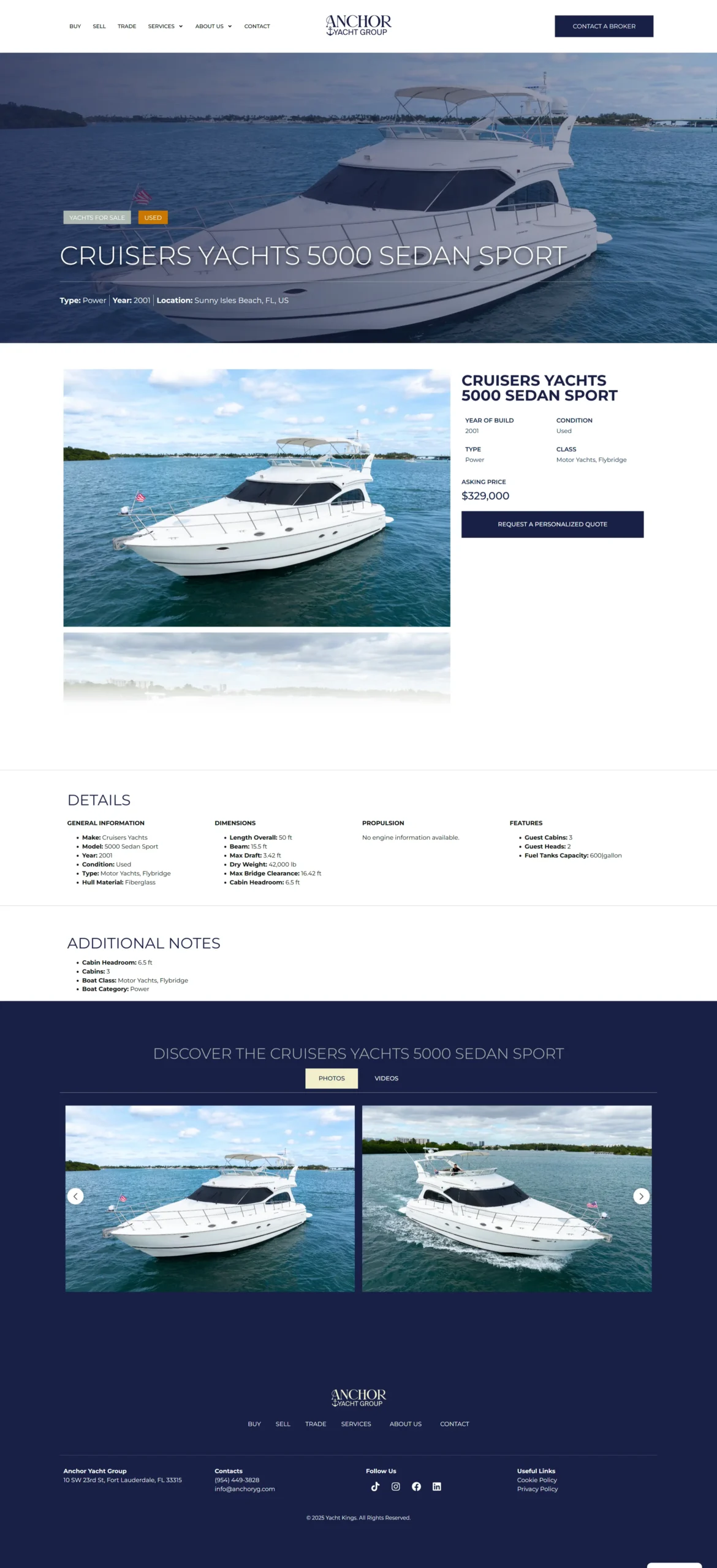
I developed a custom search engine that communicates with the Boats.com API to provide real-time results. In addition, I created a fully dynamic yacht technical data sheet, powered by data and images from the API, managed via custom shortcodes and dynamic fields linked to Elementor structures.
Test & Launch
Before launch, I conducted thorough testing on performance, mobile compatibility, user flow fluidity, and API integration stability.
Graphic consistency, adherence to brand guidelines, and the accuracy of dynamic data population were verified.
After final adjustments, the site was published and monitored over the following days to ensure a stable and optimized experience from the very first use.

Search Engine Custom
integrato con Boats.com
One of the central elements of the project was the development of a custom search engine capable of querying the Boats.com API in real time and returning updated results within the Anchoryg.com website interface.
UX design
During the UX phase, I defined a clear and linear search flow: users can filter boats by key parameters such as type, length, year, and price. The interaction was designed to be immediate, with a results structure that prioritizes readability, photos, and key information. Everything was optimized with a mobile-first approach.
Technical Architecture
The search engine was developed as an independent system but integrated into the WordPress frontend via custom shortcodes.
The technical flow involves:
- User input → search criteria collected from the form.
- API call → the request is sent to Boats.com with dynamic parameters.
- Data parsing → the returned JSON is analyzed and transformed into an output compatible with Elementor.
- Dynamic output → the results are rendered in real time within the preconfigured layout.
Integration with WordPress & Elementor PRO
- To maintain maximum flexibility:
- I developed PHP shortcodes that manage the API call, data processing, and display in the Elementor template.
- I used dynamic fields to automatically populate titles, images, and specifications in the graphic layout.
Technical data sheets linked to the search
Each result leads to a dynamic boat data sheet, also powered by API.